

News
Open Spaces Project
April 23, 2026
Setback for controversial Dulwich Hamlet Football Stadium Development following legal challenge
A Southwark resident has successfully reversed the decision of London Borough of Southwark to grant a “non-material amendment” to Dulwich Hamlet Stadium planning permission which removed the maximum storey heights and unit numbers in the description of development.
Planning permission reference 19/AP/1867 was granted on 21 February 2022 for the redevelopment of the Dulwich Hamlet Football (Champion Hill) Stadium, including the building of a new stadium with capacity for 4,000 spectators and a series of buildings between four and six storeys in height to provide 219 residential dwellings.
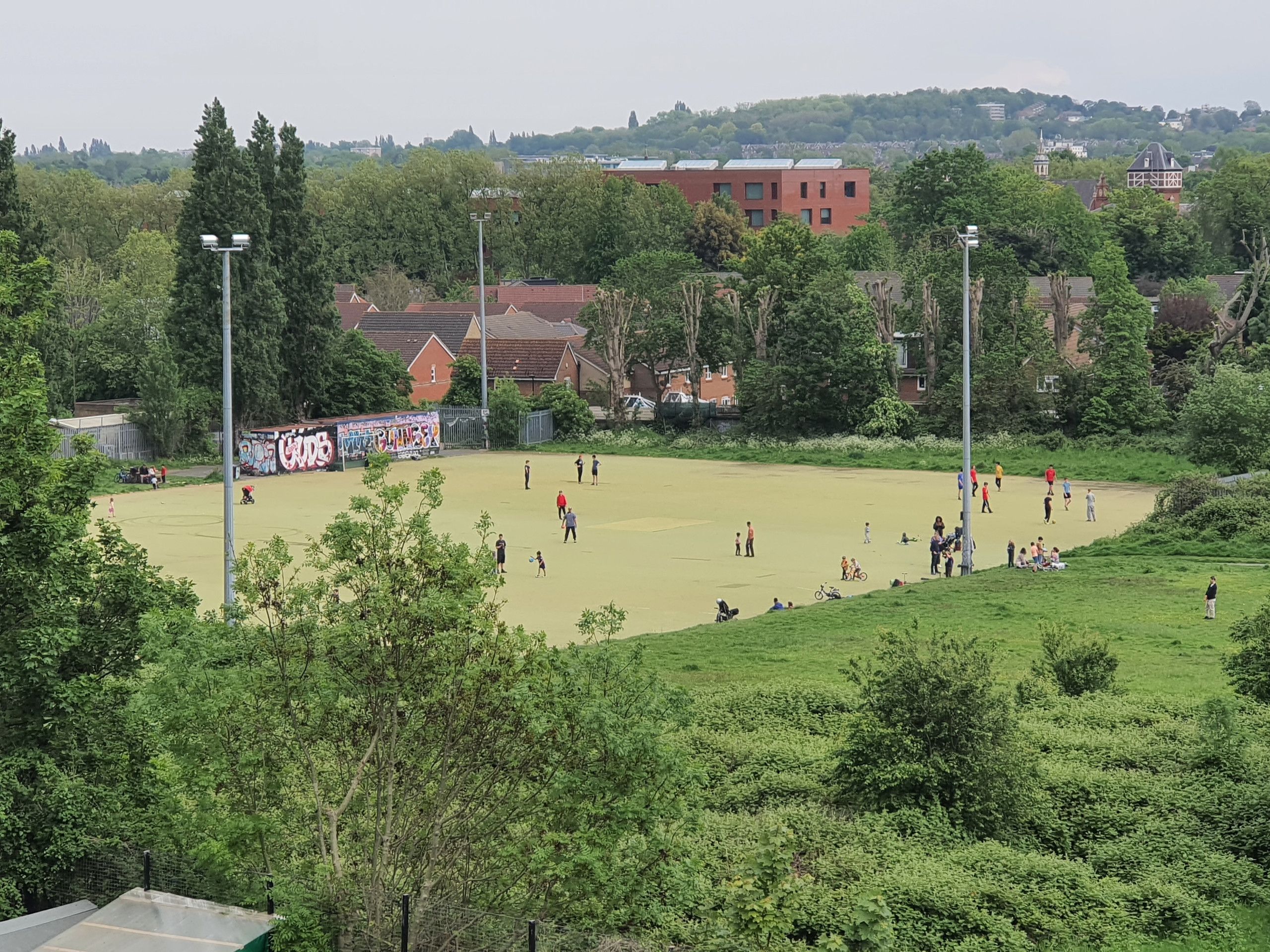
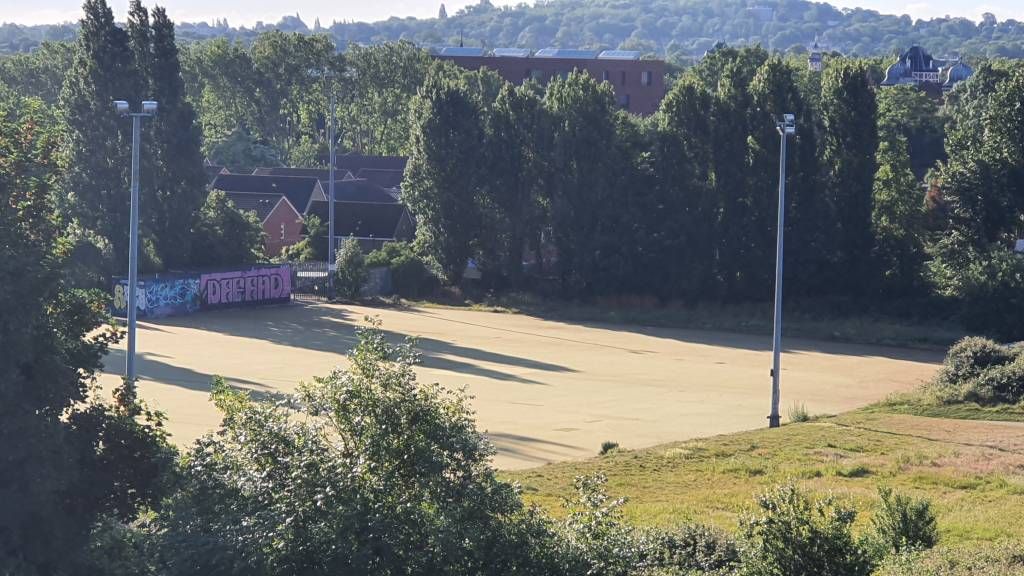
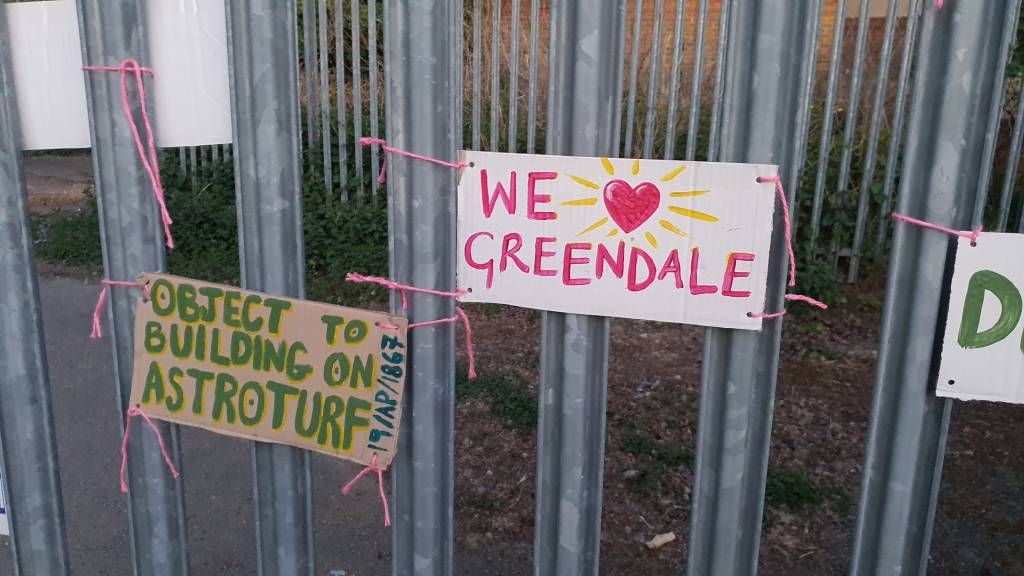
The development remains controversial among residents due to their loss of access to a local astroturf playing area which is designated as Metropolitan Open Land.
In July 2025, the developer made an application for a “non-material amendment” to the 2022 planning permission, under s96A of the Town and Country Planning Act 1990, in which it sought to remove the references to maximum storey heights and unit numbers in the description of development. London Borough of Southwark granted the amendment on 11 December 2025, on the basis that the changes were “non-material” because the height and unit numbers had simply been moved from the description of development to the conditions imposed upon the development.
The problem with this approach is that a developer can apply to amend conditions, or remove them entirely, via s.73 of the Town and Country Planning Act 1990, whereas a description of development cannot be amended in this way. The amendment therefore paved the way for significant changes to or removal of the height and unit restrictions in the planning permission.
The client challenged the decision, which had been made without the scrutiny of a planning committee due to being a purported “non-material” change.
Following a letter before claim sent on 19 December, the developer applied to reverse the changes via a further non-material amendment to re-insert the storey height and unit number limits into the description of development.
The claim was issued despite the further application, as the London Borough of Southwark needed to consult on the further amendment and the limitation period for issuing the claim would have expired during the consultation period. The client was also concerned that further “non-material” changes would follow. By the time the claim came before a Judge for a decision as to whether it should proceed to judicial review, the Council had granted the second amendment, prompted by the Claimant’s legal challenge, reinserting the restrictions into the description of development. In the Judge’s view, this meant the claim was now academic and so should not proceed to a substantive hearing. However, Mrs Justice Lieven agreed that it was “arguable” that a decision that increased the flexibility of a planning permission in this way was unlawful and said she would have been minded to grant permission had the changes not been reversed. In the circumstances she did not make the usual costs order in favour of the Council.
This outcome represents a considerable victory for the client, whose legal challenge has prevented the creation of a more flexible planning permission than what had previously been granted.
The client said:
"It is disappointing that the claim cannot proceed but Mrs Justice Lieven’s view that the application was arguable and her comments with regard to the relief from costs confirm the appropriateness of making the application for Judicial Review.
"A significant motivation in taking legal action was the planning application’s negative effect on space for play and recreation on our community. The ‘Astro’ is a well-loved and well-used space for play and recreation. A Southwark Council assessment has found that Champion Hill Ward’s play provision ward falls below the borough level in relation to its under 18s population. Other relevant issues are the density of the development, the impact of noise on existing residents and the viability of the sporting offer to our community. These issues should be considered by elected councillors.
"I am thankful for the support from the local community provided throughout the legal process. We recognise Aysen Dennis, whose victory in, Dennis, R (On the Application Of) v London Borough of Southwark [2024] EWHC 57 (Admin) (17 January 2024), provided one of the legal principles of which the legal challenge was made.
"I am most grateful to the legal team of Harriet Child from PILC and Alex Shattock from Landmark Chambers. The success that Harriet and Alex have contributed to means the issues important to our community now have a chance of being appropriately considered."
We will not rest until we see a fairer and more equitable society.
Make a donation today to support our work:
More ways to give


244-254 Cambridge Heath Road London E2 9DA
Phone: 0203 559 6342
Contact us
© Public Interest Law Centre
Charitable Incorporated Organisation in England & Wales - no: 1192355
Registered office: 244-254 Cambridge Heath Road, London, E2 9DA